
 Service Hotline:+0086 571 8620 8669 Service Hotline:+0086 571 8620 8669


— News —
MENU Telephone +0086 571 8620 8669
 WhatsApp:0086 19943450917
Hotline:+0086 571 8620 8669
Phone :+0086 571 8620 8669
Address:Hangzhou Yuhang Economic and Technological Development Zone
Company News
Time:2026-06-15 09:42:26 Click:106
There are two protection methods for high-altitude falls under safety protection equipment, one is buffering and the other is instantaneous self-locking. These two protection methods are used in different scenarios, and we will further analyze them below.
To ensure the safety of the falling person, increasing the elasticity of the rope to increase buffering is a good choice. This means that when a person falls, the kinetic energy of the fall continuously increases. When the safety rope is subjected to impact force, the conversion of kinetic energy is not instantaneous, otherwise the human body will find it difficult to withstand. In fact, it gradually converts kinetic energy into elastic potential energy, and releases kinetic energy when the elastic potential energy reaches its peak. This is often used for entertainment projects, and is most evident in bungee jumping.
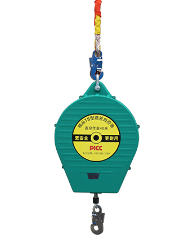
In order to ensure the safety of the falling person, there is a device that adopts the principle of instantaneous self-locking, and its safety rope does not have elasticity, that is, there is no buffering effect. At the moment when a person falls, which is the initial stage when kinetic energy begins to increase, the impact force generated abruptly stops and is extremely low, not enough to cause harm to the human body. This type of protection is often used for high-altitude operations and is fully reflected in fall arresters.
These are currently the two common methods for preventing injuries from high-altitude falls, the former being mostly used for entertainment and the latter for work.
Last:Both working states of the speed differential anti fall devi
Next:Nothing new
Recommend

Hotline
Screenshot, wechat identification QR code
Wechat:0086 19943450917
(Click wechat copy to add friends)